GEO vs AEO: Short Answers and Trusted Sources
Learn how AEO makes content a direct answer and how GEO makes brands a trusted source in AI-generated responses, with practical steps for marketers.
 Mira Chen11 min read
A Reddit thread in r/DigitalMarketing asked for a simple explanation of GEO and AEO. The useful distinction is this: AEO helps content become the direct answer to a specific question, while GEO helps a brand or source become part of a longer AI-generated answer. For marketing teams, the difference matters because AI search visibility is no longer only about ranking a page. It is also about whether answer engines can extract, cite, and trust the right evidence.
This article keeps that simple framing and turns the thread's strongest examples into a practical guide: short answers, trusted sources, third-party evidence, and a starter workflow for marketers.
The Simple Difference
Think of the difference as short answer versus trusted source.
- AEO means becoming the short answer.
- GEO means becoming a trusted source behind a generated answer.
Here is the simple example from the Reddit thread, expanded for marketers.
A user asks: "What is the capital of France?"
If an answer engine takes the answer "Paris" from your page, that is AEO. The system needed a direct answer, and your page gave it one clearly.
A user asks: "Explain the history of Paris."
If an AI assistant uses your detailed article about Paris to build a longer explanation, that is GEO. The system is not just extracting one fact. It is using your content as source material for a generated response.
That memory trick is enough for most teams to start:
| Term | Simple role | Example |
|---|---|---|
| SEO | Rank the page | Your page appears in Google results for "history of Paris" |
| AEO | Be the short answer | The answer "Paris" is pulled from your page |
| GEO | Be the trusted source | Your article helps AI explain the history of Paris |
What AEO Means
AEO stands for Answer Engine Optimization. It is the practice of making content easy for answer engines to extract when the user asks a direct question.
AEO applies to systems such as Google AI Overviews, featured snippets, voice assistants, Perplexity answers, and AI search interfaces that summarize a quick fact or answer.
AEO works best when the search intent is narrow:
- What is X?
- How many steps are in Y?
- How long does Z last?
- What is the difference between A and B?
- Which requirement applies in this case?
For example, if someone asks "How long does sake last after opening?" an AEO-friendly page should not bury the answer under a long introduction. It should answer the question directly, then explain the conditions, storage advice, and exceptions.
Good AEO content usually has:
- the actual answer in the first sentence
- short paragraphs
- clear headings
- bullet points or numbered steps
- FAQ sections
- structured data where it matches the content
- facts without keyword stuffing or filler
AEO is not about writing robotic content. It is about reducing ambiguity. The answer engine should be able to tell what question the page answers and which sentence or section can be reused.
What GEO Means
GEO stands for Generative Engine Optimization. It is the practice of making your brand, content, and evidence useful to AI systems when they generate longer answers.
GEO is broader than AEO. It matters when the user asks for explanation, comparison, recommendation, strategy, or context.
Examples include:
- "What are the best tools for tracking AI search visibility?"
- "How should an enterprise brand measure AI citations?"
- "What is the best approach to improving brand visibility in ChatGPT?"
- "Which vendors are trusted for global AI search monitoring?"
In these cases, the AI system may pull from your website, review sites, Reddit discussions, LinkedIn posts, analyst pages, product documentation, media coverage, and competitor pages. It then synthesizes the answer.
That is why GEO is not only about one page. It is about whether your brand is clear, consistent, trusted, and present in the sources AI systems tend to use.
GEO vs AEO vs SEO
SEO, AEO, and GEO overlap, but they optimize for different outputs.
| Discipline | Main output | What the user sees | What the marketer improves |
|---|---|---|---|
| SEO | Search ranking | A list of links | Crawlability, relevance, authority, internal links, page quality |
| AEO | Direct answer | A short answer, snippet, voice answer, or AI overview | Clear definitions, FAQ blocks, concise explanations, schema, answer formatting |
| GEO | Generated narrative | A synthesized explanation, comparison, recommendation, or brand mention | Entity clarity, source trust, third-party citations, expert content, prompt monitoring |
Another useful way to say it:
- SEO: Can people find our page?
- AEO: Can AI answer with our content directly?
- GEO: Can AI use our brand or perspective in the full answer?
For CitedMe's audience, the third question matters most. A global brand does not only need a page to rank. It needs AI platforms to describe the brand accurately, include it in the right category conversations, and cite sources that the team can inspect.
How to Optimize for AEO and GEO
The strongest practical advice in the Reddit discussion was a simple checklist. Here is the marketer-ready version.
1. Start with the answer
Put the direct answer near the top. If the page answers "What is AEO?" the first paragraph should define AEO. Do not make the reader or the answer engine dig through a long setup.
2. Use short, digestible structure
Use short paragraphs, clear H2s and H3s, bullet points, numbered steps, and tables where they help. AI systems can parse messy pages, but clean structure gives them less room to misunderstand.
3. Create focused pages, not one giant guide for everything
A single massive guide often becomes unfocused. It can be better to create many short, specific pages that answer one question well.
For example, instead of one broad article about beverage storage, a site might publish a focused page answering "How long does sake last after opening?" That page has a clearer AEO target and can also support a broader GEO cluster about sake storage and buying advice.
4. Add FAQs that answer real follow-up questions
FAQ sections work because they match the way people ask questions. They also make the answer boundary clear. Avoid fake FAQs that repeat the same keyword. Use questions a buyer, reader, or customer would actually ask.
5. Use schema where it labels real content
FAQ, HowTo, Product, Article, and Organization schema can help systems understand what a page contains. Schema is not a magic switch. It works best when it labels content that is already useful and visible on the page.
6. Remove filler and keep facts
Long introductions, vague claims, and repeated keywords make content weaker for both humans and AI systems. Keep the facts, examples, criteria, and sourceable claims. Cut the padding.
7. Show authority with expertise or data
Answer engines and generative systems prefer sources they can trust. That trust can come from author identity, expert quotes, original data, product documentation, customer evidence, third-party reviews, or consistent public profiles.
Why Third-Party Sources Matter
One important point in the thread is that B2B brands should not rely only on their own website. Third-party sites can matter a lot for AI visibility.
For B2B SaaS, sources such as G2, Capterra, Gartner pages, industry media, analyst mentions, customer reviews, LinkedIn, Reddit, YouTube transcripts, and partner pages may all influence how AI systems understand the market.
This matters because generative answers often need verification. If your website says one thing, but trusted external sources say nothing, the AI system has less confidence. If multiple credible sources describe your brand consistently, the system has more evidence to work with.
For GEO, the question is not only "What should we publish?" It is also "Where does our category get trusted evidence?"
The RAG Layer: Why This Is Not Just Training Data
A common objection is that LLMs are probabilistic and nobody can know exactly how every user prompt will behave. That caution is valid. GEO and AEO measurement is still developing, and no brand should treat a synthetic prompt test as perfect proof of future demand.
But the opposite claim is also too simple. Many AI search experiences use retrieval. They search the web, fetch pages, extract content, and synthesize an answer. Perplexity is the clearest example, and browsing-enabled AI assistants can also use live web results.
That means AEO and GEO are not only about being included in future training data. A lot of AI visibility happens through the retrieval layer: the pages, snippets, citations, and third-party sources that AI systems can access now.
For marketers, the practical conclusion is balanced:
- Do not believe anyone who promises total control over AI answers.
- Do not ignore AI search because measurement is imperfect.
- Improve the sources that AI systems can retrieve, parse, cite, and trust.
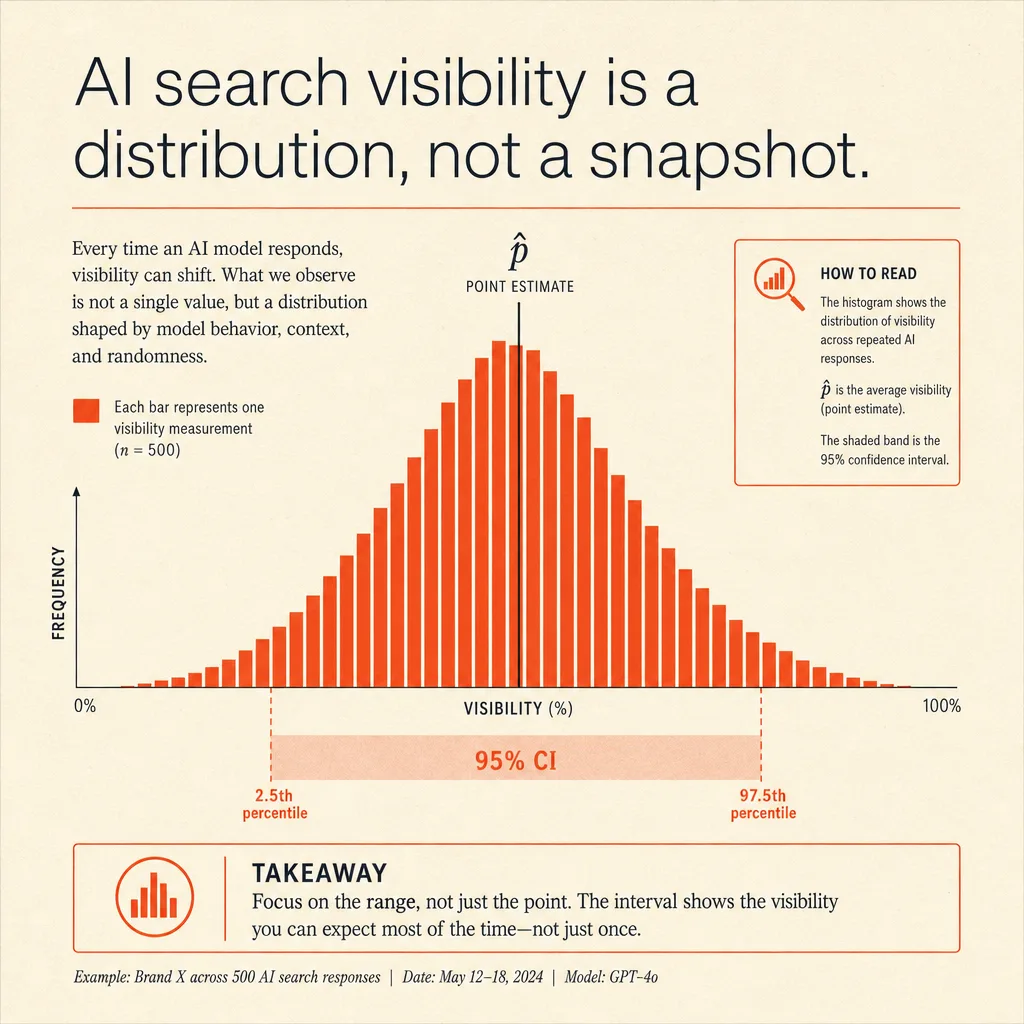
- Track results with stable prompt sets instead of one-off screenshots.
A Simple Starting Workflow
If your team is starting from SEO knowledge, do not begin with a giant GEO program. Begin with three questions.
1. Which questions matter before someone chooses us?
Pick the questions buyers ask before they trust a vendor, product, or category. Start with three to ten prompts, not hundreds.
Examples:
- "What is the best way to track AI search visibility?"
- "Which tools monitor brand mentions in ChatGPT?"
- "How do brands improve citations in AI answers?"
2. Are we in the answer?
Run those prompts in ChatGPT, Perplexity, Gemini, and Google AI Mode where relevant. Record whether your brand appears, where it appears, how it is described, and which sources are cited.
This gives you an AEO/GEO baseline.
3. What source would make the answer better?
If the answer is missing your brand, weak on facts, or cites competitors, inspect the sources. You may need a clearer definition page, a comparison article, an FAQ, a review profile, a customer story, expert content, or a third-party mention.
That is where CitedMe fits: it turns prompt checks, answer presence, citations, competitors, sentiment, and source gaps into a repeatable operating system for global brands.
Common Misunderstandings
GEO and AEO are not completely separate channels
They overlap. AEO can support GEO because clear answers become useful source material. GEO expands the scope to generated narratives, brand inclusion, citations, and third-party evidence.
GEO is not geo-targeting
In this context, GEO means Generative Engine Optimization, not geographic targeting. The acronym can be confusing, so spell it out when writing for executives or clients.
AEO is not audience engagement optimization
In this context, AEO means Answer Engine Optimization. Some people use the acronym differently, but the AI search meaning is about answer extraction and answer visibility.
Schema alone will not win AI answers
Schema helps label content. It does not replace useful writing, authority, consistency, or trustworthy sources.
AI visibility is not measured only by clicks
Many AI answers do not generate a website visit. Track brand presence, citations, answer position, sentiment, and competitor inclusion alongside traffic.
FAQ
What is the simplest difference between GEO and AEO?
AEO helps your content become the direct answer to a specific question. GEO helps your brand or content become part of a generated AI answer when the response needs explanation, comparison, or recommendation.
What is a simple AEO example?
A user asks, "What is the capital of France?" If an answer engine pulls "Paris" from your page, that is AEO because your content supplied the short answer.
What is a simple GEO example?
A user asks, "Explain the history of Paris." If an AI assistant uses your detailed article as source material for the longer explanation, that is GEO.
Is GEO just SEO for AI?
GEO depends on many SEO foundations, but it measures a different result. SEO looks at rankings and traffic. GEO looks at whether AI answers mention your brand, cite useful sources, describe you accurately, and include you in the right narratives.
What should marketers do first?
Pick the three most important questions a buyer would ask before choosing you. Run them in ChatGPT and Perplexity. Record whether your brand appears, which sources are cited, and what content or third-party evidence would make the answer more accurate.
Author
Mira Chen
Mira Chen studies how global brands appear in AI answer engines and turns that evidence into practical GEO workflows.