GEO vs SEO: Which Optimization Strategy Wins in 2025?
You optimized for Google's algorithm. Now AI answer engines are pulling traffic away.
 Mira Chen12 min read
You optimized for Google's algorithm. Now AI answer engines are pulling traffic away.
That's the GEO vs SEO debate in 2025. Traditional SEO gets your page to rank on search results. Generative Engine Optimization (GEO) makes your content show up in ChatGPT, Perplexity, and other AI summaries. They aren't rivals. Content that wins does both: it satisfies crawlers and gives AI models clear, authoritative answers. This guide shows you exactly which adjustments close that gap — without rewriting everything from scratch. Here's where to start.
What Exactly Is GEO and How Is It Different from SEO?
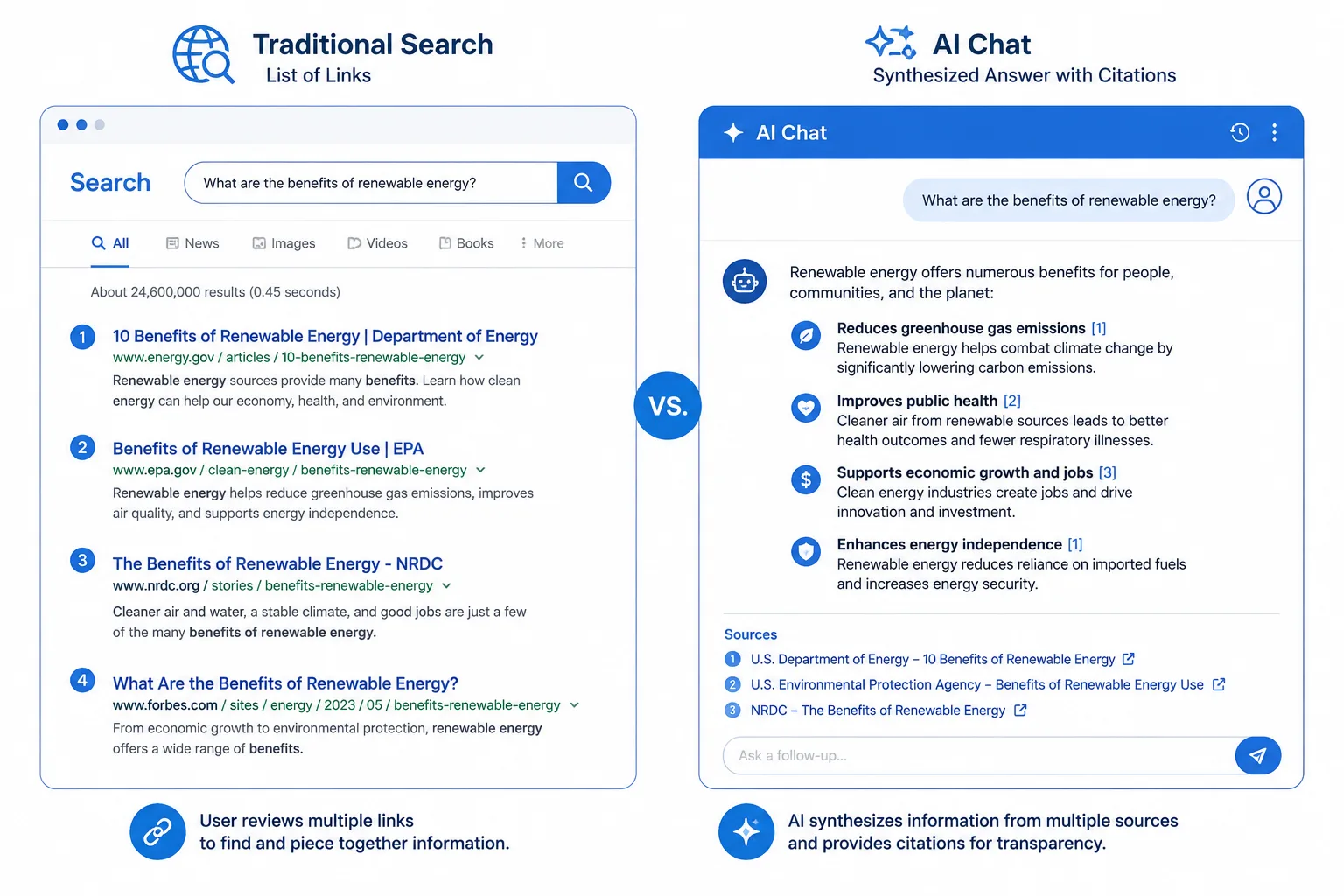
Search engines like Google work by crawling pages, indexing content, and ranking them based on hundreds of signals — relevance, backlinks, page speed, user behavior. When you search, you get a list of blue links. Your job is to click the one that looks best. Traffic flows to the top-ranked page.
Generative AI engines work differently. Tools like ChatGPT, Perplexity, and Google's own AI Overviews don't return link lists. They read your content — along with dozens of other sources — and synthesize a direct answer. The user never clicks. They get the answer right there. The AI decides which sources to cite and which to ignore.
This is the GEO vs SEO difference boiled down: SEO gets you visible on a results page. GEO gets you quoted in an AI's answer. You can be number one on Google and still get zero citations from ChatGPT. You can also be lower-ranked but structured in a way that AI models prefer, and see your brand mentioned in replies.
How Traditional Search Engines Work
Crawlers follow links, read your HTML, and index your pages. The ranking algorithm weighs factors like keyword match, backlink authority, freshness, and mobile-friendliness. Users scan titles and snippets, then click through. Your traffic is tied to position — top three links capture most clicks.
But the model is simple: the user leaves Google and lands on your site. You control the experience from there.
How Generative AI Engines Work
Large Language Models (LLMs) generate answers using two methods. First, they draw from their training data — information baked into the model during development. Second, they pull real-time information through Retrieval-Augmented Generation (RAG), which searches the web or a knowledge base on the fly.
AI answer engines prioritize three things: factual accuracy (they hate being wrong), conciseness (long rambling paragraphs get cut), and trust signals (they prefer citing authoritative sources — recognized domain authority, clear authorship, recent updates). If your content is vague, overly promotional, or buried behind paywalls, the AI skips you.
Here's a direct comparison:
| Search Engine (SEO) | Generative AI (GEO) |
|---|---|
| Returns a list of links | Returns a synthesized answer |
| Traffic depends on click-through rate | Traffic depends on citation frequency |
| Rewards keyword density and backlinks | Rewards clear structure and factual accuracy |
| User leaves the search engine | User stays in the chat interface |
| Content can be long and detailed | AI prefers short, direct paragraphs |
The same page can win in both systems. But the tactics differ. For SEO, you might stuff keywords and chase links. For GEO, you write concise answers, cite data with sources, and use clear headings that the AI can extract as "evidence." Many site owners are now running both strategies side by side — tracking which pages get cited in AI responses and which only get clicks.
A practical example: You run a guide on "how to change Telegram account phone number." SEO wants you to repeat the phrase "change Telegram number" often and get other sites to link to you. GEO wants you to write a step-by-step answer with clear numbered steps, mention the official Telegram help page as a source, and avoid fluff. ChatGPT will quote the numbered steps directly and cite your domain. Both approaches matter, but they serve different outcomes — and smart content strategies account for both.
What Are the Key Differences Between GEO and SEO in Practice?
The GEO vs SEO differences come down to three areas: what you feed the system, how it ranks content, and how you measure success. Each area changes where you put your effort.
Input Signals: Keywords vs. Prompts
SEO still works on exact-match keywords and related terms. You pick a phrase, build content around it, and hope crawlers match your page to the search query.
GEO flips that. AI answer engines get fed natural language questions — full sentences people type into ChatGPT or Perplexity. Your content needs to answer those questions completely, not just include the keyword. It should also anticipate follow-up prompts and structure answers for easy extraction.
| SEO Inputs | GEO Inputs |
|---|---|
| Exact-match and LSI keywords | Natural language questions and follow-ups |
| Content built around keyword density | Content structured for AI extraction |
Ranking Logic: Blue Links vs. Generative Answers
On a search engine results page, you see multiple blue links. Your job is to get your link on page one.
In a generative answer engine, the AI picks one synthesized response — often with citations from a handful of sources. GEO success means being that cited source. You don't just need to rank; your content needs to be the answer the AI chooses to summarize.
| SEO Ranking | GEO Ranking |
|---|---|
| Multiple blue links compete for clicks | One synthesized answer with citations |
| Focus on link position and CTR | Focus on being the primary source cited |
KPIs & Measurement: Traffic vs. AI Visibility
SEO people watch sessions, keyword positions, and conversion rates.
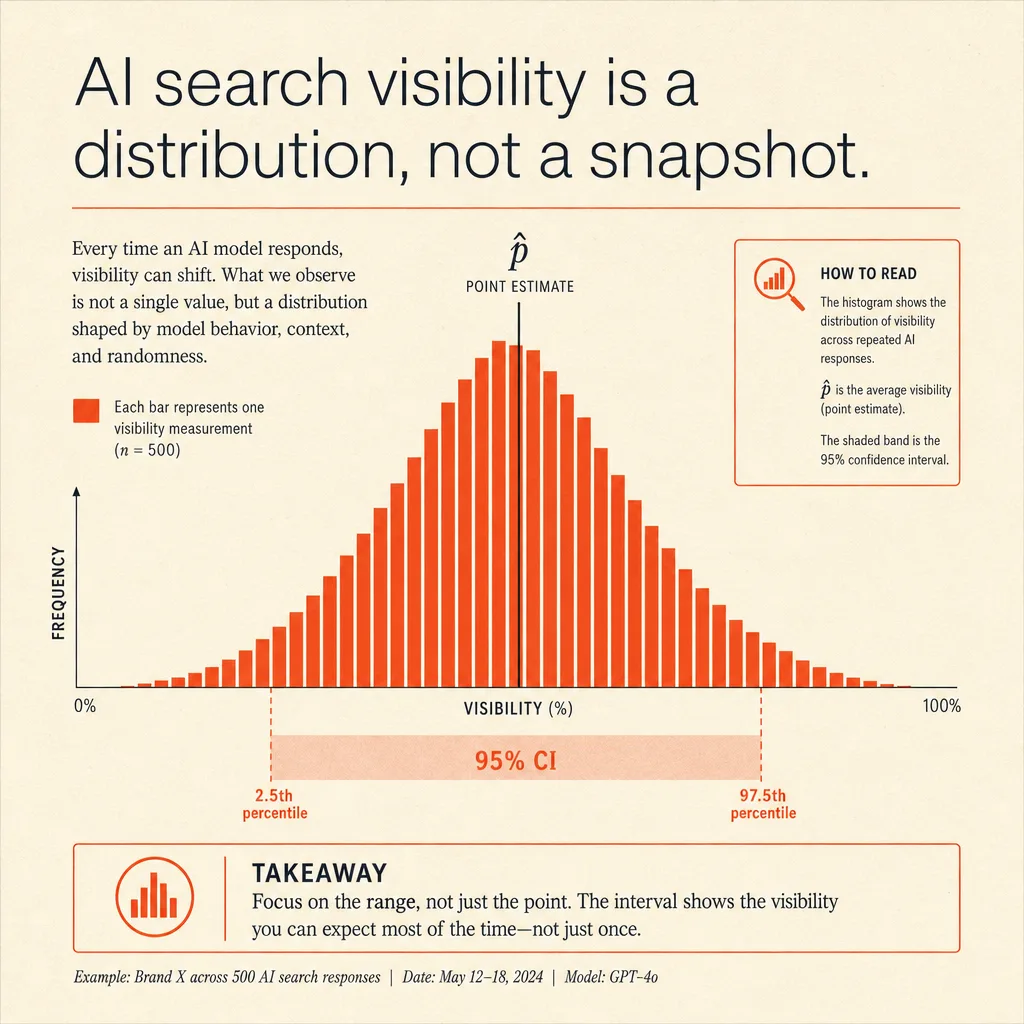
GEO metrics are different. You want to track your share of voice in AI answers, how often your content gets cited, and the trust score that models assign to your domain. These tell you if AI engines consider your content authoritative enough to pull into a summary.
| SEO KPIs | GEO KPIs |
|---|---|
| Sessions, keyword rank, conversion rate | Share of voice in AI answers, citation frequency, trust score |
Understanding these differences helps you decide where to put your effort. The real shift is moving from "get my link seen" to "get my content used as the source of truth."
Which One Should You Prioritize for Your Content Strategy?
The answer isn't a simple either-or. Your choice depends on who you're trying to reach and what you want them to do. Focus on GEO if your audience uses AI assistants to find answers; stick with SEO if you need direct clicks and conversions. Here's how to decide.
When GEO Takes Priority
Your content needs to appear in AI summaries when users rely on tools like ChatGPT or Perplexity for research. That's common in three scenarios.
Your audience uses AI assistants heavily. B2B buyers often start with a question like "best CRM for small teams" and get a summary before clicking any link. If your content isn't optimized for that, you lose visibility before the search begins. Product comparisons, industry reports, and technical explanations are prime candidates.
Your content is educational or how-to. People searching "how to set up a proxy" or "what causes account bans" want fast, clear answers. AI models pull from content that answers these directly. If your page ranks on Google but doesn't appear in the AI answer, the reader never sees your site.
You want to be the cited authority. AI summaries often include source citations. Getting your content referenced there builds credibility with users who then click through for details. That's a compounding effect — appearing in AI answers drives more organic visits over time.
When SEO Should Lead
Traditional search still dominates for many business models. Stick with SEO when the following conditions apply.
Your business depends on clicks and conversions. If you sell products, generate leads through landing pages, or run display ads, you need people to visit your site. AI answers give summaries without requiring a click. SEO remains your primary channel for driving traffic, especially for transactional queries like "buy Telegram account" or "sign up for service."
You target local or long-tail intent. Queries like "plumber in Austin" or "how to fix a leaky faucet step by step" rarely trigger AI answers. Google's local pack and traditional results still handle these. Similarly, very specific long-tail searches with low search volume often go unnoticed by AI models. SEO is more reliable here.
You have an existing strong backlink profile and domain authority. If your site already ranks well, don't abandon that advantage. AI models also favor authoritative domains. A well-optimized piece of content can rank on Google and appear in AI summaries at the same time — but only if the SEO foundation is solid.
Quick Comparison Table
| Scenario | Priority | Reason |
|---|---|---|
| B2B research, product comparisons | GEO | AI assistants dominate discovery |
| How-to, educational content | GEO | Users want direct answers |
| Transactional intent (buy, sign up) | SEO | Need clicks to convert |
| Local search, long-tail queries | SEO | AI coverage is thin |
| Strong existing domain authority | SEO | Use current rankings |
In practice, most content strategies blend both approaches. If you're starting fresh, ask yourself: "Will people copy-paste my content into an AI to get a summary, or will they click to read it directly?" That one question usually points the right direction.
How to Build a Dual Optimization Strategy That Works for Both GEO and SEO
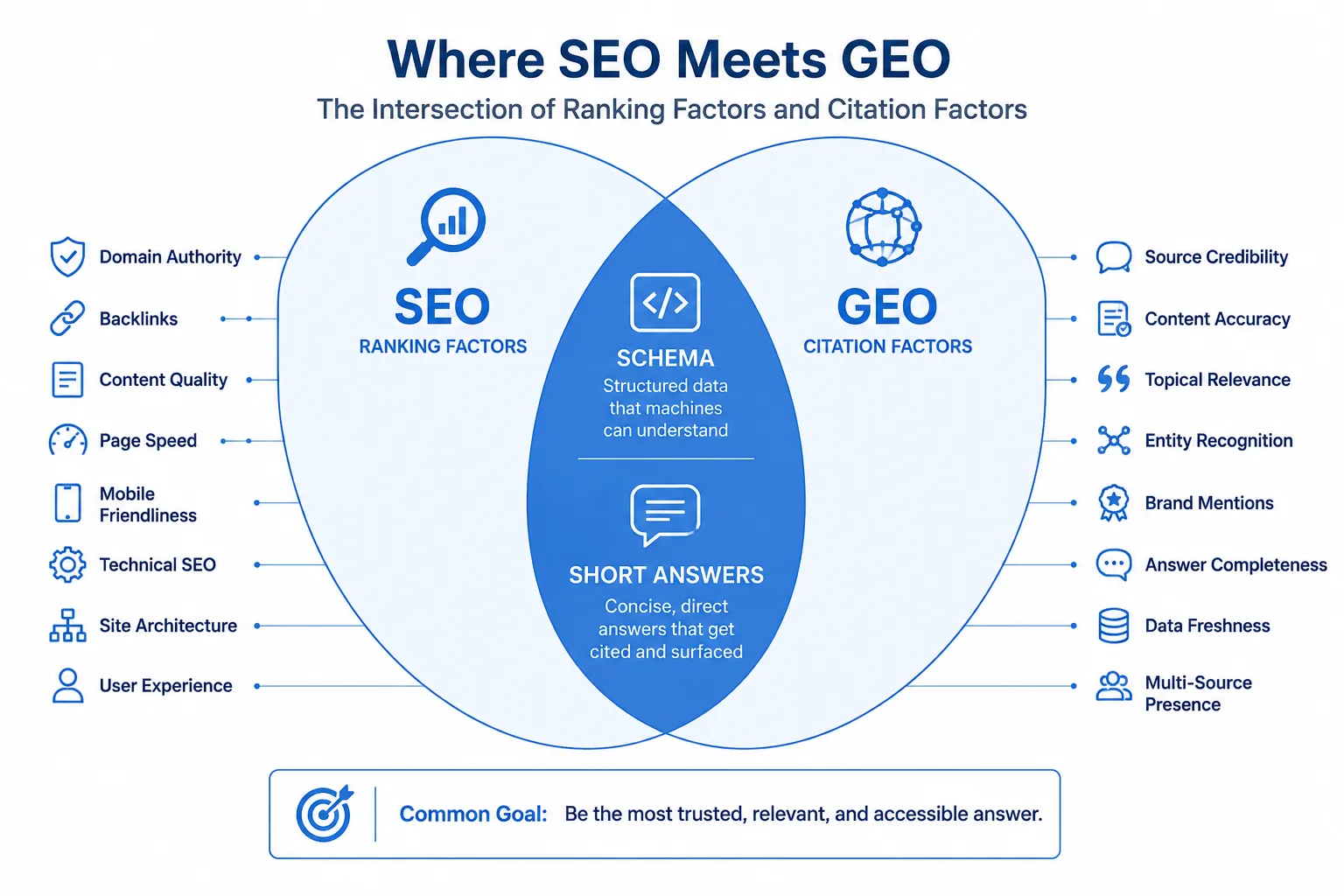
The GEO vs SEO debate misses the point. You don't have to choose one or the other. Content that ranks on Google and gets cited by AI answer engines follows the same base rules: clarity, authority, and structure. The adjustments are small but precise. Here are the three actions that close the gap between traditional SEO and Generative Engine Optimization.
Create Authoritative, Well-Structured Content
Start each article with a short answer section — around 50 to 100 words that directly address the user's core question. This helps both Google's featured snippets and AI models like ChatGPT pull a clean summary. Use descriptive H2 headings that mirror real search queries. Instead of "Benefits of X," write "How does X reduce login issues?" Include specific data points, quotes, and citations from reputable sources. Generative engines favor content that cites established references. If you quote a government report or a peer-reviewed study, make sure the source is clearly linked. This single change — front-loading a direct, cited answer — improves your chances of appearing in AI summaries without hurting your SEO ranking.
Use Structured Data and Schema Markup
Schema markup tells machines what your content means. For dual optimization, focus on FAQ schema, HowTo schema, and Article schema. These formats are easy for Google to parse and equally easy for large language models to extract. For example, a well-structured FAQ section with question-and-answer pairs can appear both as a Google rich result and as a cited source in Perplexity. Schema doesn't just explain hierarchy — it creates a predictable pattern that AI models trust. Implementing schema takes a few lines of JSON-LD per page. If you already have schema, check that it matches the actual content on the page. Mismatched schema can confuse both crawlers and AI models.
Monitor AI Citations and Adjust
You can't improve what you don't measure. Tools now exist to track where your content appears in answers from ChatGPT, Perplexity, and Gemini. Run a quick audit every two weeks. Look for which pages get cited and which get ignored. Pages that rank well in Google but never appear in AI answers likely need shorter, more direct answer blocks or stronger citations. Pages that get cited by AI but rank poorly may need better internal linking and meta descriptions. Adjust the content that underperforms in either channel. The goal isn't to perfect every page — it's to identify the 20% of your content that drives the majority of AI and search traffic, then double down on that format.
Frequently Asked Questions
What is the main difference between GEO vs SEO?
SEO optimizes for search engine result pages to drive clicks. GEO optimizes for generative AI engines to become the cited source in synthesized answers.
Can GEO replace SEO in the future?
No. GEO vs SEO will coexist. SEO remains vital for transactional intent. GEO captures zero-click informational queries where users get answers without visiting a website.
How do I measure GEO success?
Track brand mentions in AI outputs, citation frequency, and share of voice in answer snippets for your target prompts. These metrics show how often AI cites your content.
What content formats work best for GEO?
Short, direct answers like FAQs, structured lists, and well-cited statistics. These formats are most likely to be pulled into generative AI responses.
Both GEO and SEO focus on making content discoverable, but GEO prioritizes direct answers within generative search results while SEO aims for traditional click-through rankings. A balanced strategy that respects both paradigms ensures your content appears wherever users seek information, whether through a search engine results page or an AI-generated response. Learn how to improve your content for both GEO and SEO with our free guide
Author
Mira Chen
Mira Chen studies how global brands appear in AI answer engines and turns that evidence into practical GEO workflows.