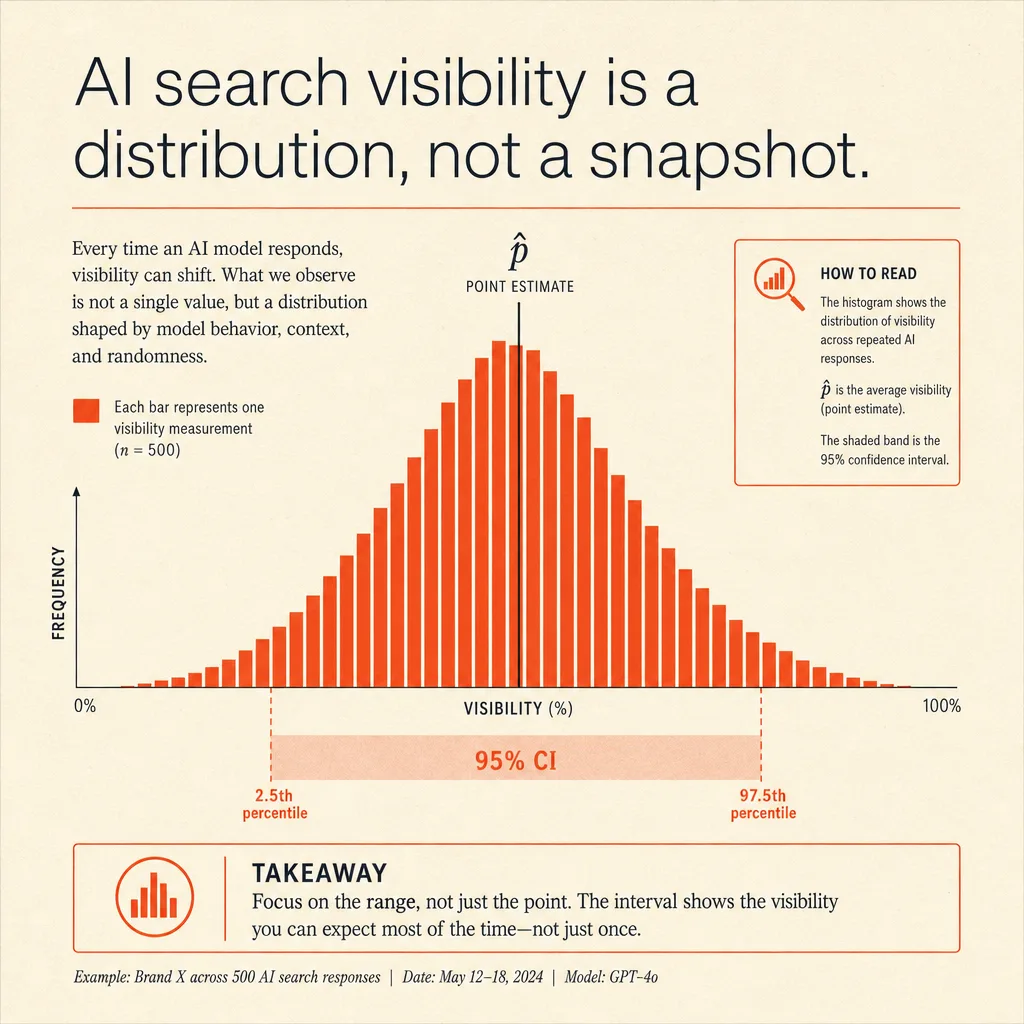
How to Measure and Improve Your LLM Brand Sentiment: A Complete Guide
Learn how LLM brand sentiment shapes AI search recommendations, how to measure it with prompts and source tracking, and how to improve weak signals.
 Mira Chen11 min read
A single negative review can change how an LLM describes your brand for weeks. This is what llm brand sentiment measures — the collective AI perception built from your online presence. It directly influences how search tools and chatbots represent your company. A poor score means fewer referrals, more hesitations, and harder sales. This guide shows how to track that score, spot the sources that hurt it most, and improve it using straightforward steps. No guesswork, just the levers that actually move the numbers.
Why does LLM brand sentiment matter for your business?
Your brand’s reputation used to be shaped by what people wrote about you. Reviews, press coverage, and social media posts all added up to a picture that customers saw. Today, that picture is also being drawn by AI systems that read those same sources and then summarize them in a chat window. This shift from human-only monitoring to machine-generated perception is where llm brand sentiment becomes a real business lever.
The shift from traditional brand monitoring to AI-driven perception
Traditional sentiment analysis tracked how often your brand showed up in positive or negative human content. You could fix a bad review, push out a press release, and the balance would shift. LLM sentiment works differently. These models don’t just count mentions — they synthesize multiple sources into a single answer. One negative review from a high-authority site can get amplified inside an AI’s training data. Even if you clean up the source later, the model may keep repeating that negative angle for weeks or months.
This means the old playbook — “reply to the bad review and move on” — no longer works. The AI doesn’t forget as fast as a human does. You have to actively reshape the inputs that models rely on.
How LLM brand sentiment impacts customer decisions
People now ask AI assistants for product recommendations and brand comparisons. A user might type “Which CRM works best for a small team?” into ChatGPT or Google Gemini. The answer they get directly depends on how those models perceive your brand. If your llm brand sentiment is positive, the model is more likely to recommend your product. If it’s negative — or just vague — the model will skip you or mention a competitor instead.
This doesn’t just affect first impressions. It changes conversion rates. A positive mention from an AI can steer a buyer toward a trial signup. A negative mention can make them pause and look elsewhere. The impact is compounding: every time a user hears a favorable AI response, trust builds. Every time they hear a warning, trust drops.
The connection to Generative Engine Optimization (GEO)
GEO is the practice of improving how AI models perceive and rank your brand across topics. Sentiment is one of its core dimensions. Optimizing your content for clarity, factual accuracy, and positive framing can shift the model’s internal score over time. You’re not tricking the AI — you’re giving it better material to draw from.
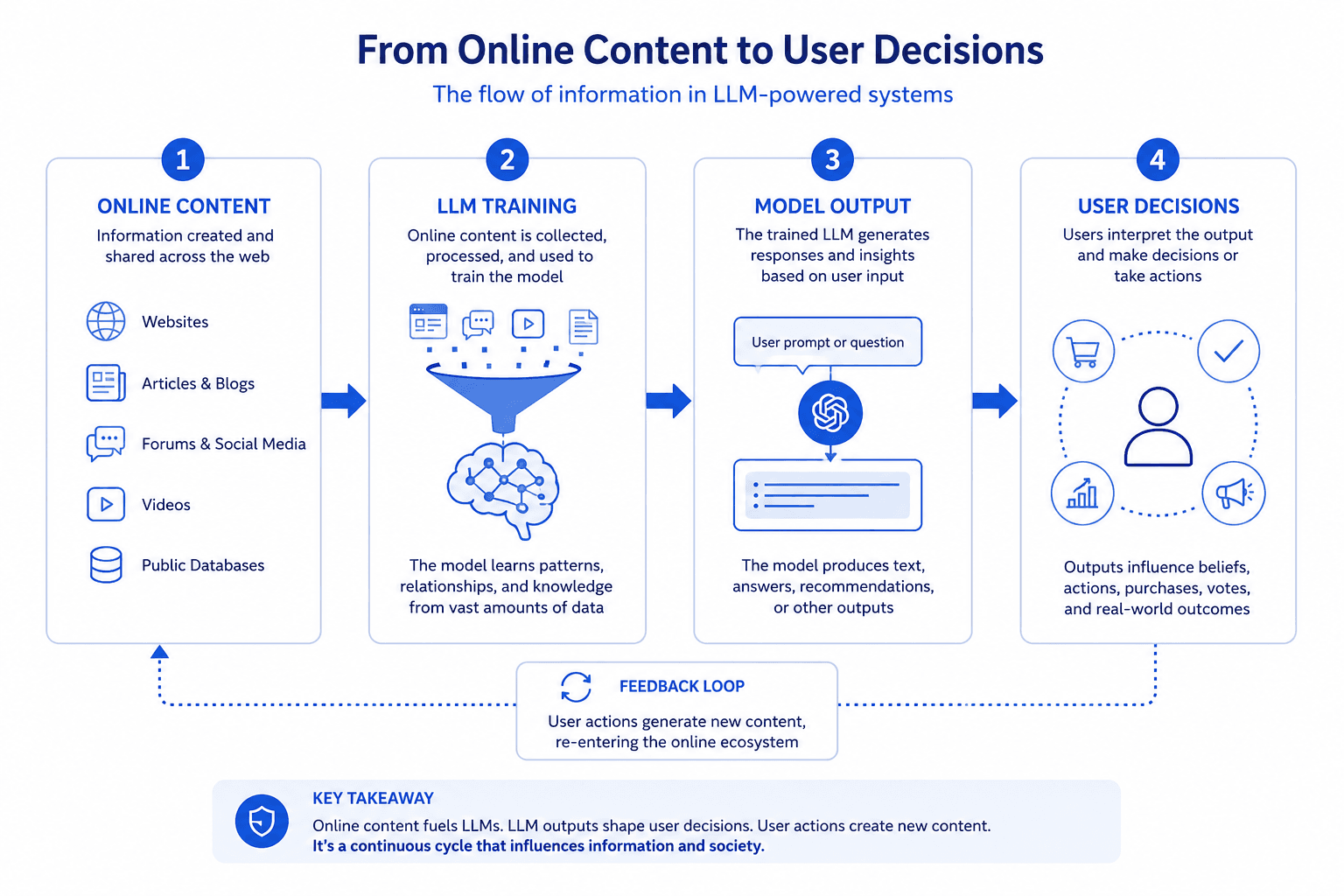
The same content changes that help human readers — clear language, verified data, transparent claims — also help the AI. When you make those changes consistently, llm brand sentiment moves upward. And that movement translates into more referrals, more trust, and fewer lost sales.
How can you accurately measure your brand sentiment in large language models?
Measuring llm brand sentiment isn’t a single test. You need three layers: smart prompts, source tracking, and automated scoring. Each layer catches what the others miss.
Designing effective sentiment prompts for LLMs
Start with prompts that match how real people ask about a brand. Don’t ask “Is Brand X good?” — that leads the model. Use neutral questions like “What do people say about Brand X?” or “Describe the reputation of Brand X.”
Run variations for product quality, customer service, and trust. For example: “Is Brand X reliable for small businesses?” and “How do users describe Brand X’s support team?” Compare the answers. A model might praise your product but flag your support.
Key principle: keep phrasing consistent across tests. If you change words, you change the result. Run the same set of prompts every week. That gives you a baseline to spot shifts.
Analyzing source influence on sentiment
LLMs don’t make up opinions. They pull from specific pages, reviews, and forums. Your job is to find which sources drive the output.
You can use a tool like Peec AI to see which URLs an LLM cites when answering about your brand. It shows whether each source leans positive or negative. If a single Reddit thread or a bad review keeps showing up, that source is dragging your score down. Fix or replace that content first.
Don’t guess which article hurts you. Map the actual citations. The table below compares manual checking versus automated source tracking.
| Method | What it does | Effort needed |
|---|---|---|
| Manual reading | Search LLM outputs for linked URLs | Hours per check |
| Automated tracking | Tool lists cited sources with sentiment scores | Minutes per check |
Automated tracking saves time and gives you a clear list of what to fix.
Automated sentiment scoring with AI analytics platforms
Manual prompt testing is useful but slow. For ongoing measurement, use an analytics platform that scores sentiment automatically. Brandwatch and Lexalytics now offer modules built for LLM outputs.
These tools assign a score, often on a scale from -2 (very negative) to +2 (very positive). They run the same prompts at set intervals — daily or weekly — and chart changes. You can see if a new review or a press release moved your number.
Set up alerts for drops below a threshold. A score that falls from +1.0 to -0.5 in a week means something changed in your online presence. Track those shifts, trace them back to the source (using the method above), and take action.
These three layers together give you a clear picture of your llm brand sentiment. Prompts catch nuance, source tracking pinpoints causes, and automated scoring keeps you informed over time. Run them as a cycle, not a one-time check.
What are the best strategies to improve your brand sentiment in AI responses?
Three areas matter most: fixing what LLMs already see about you, creating content they can quote, and managing the signals that shape their opinion. Each one moves the needle on a different part of how AI perceives your brand.
Improve entity hygiene and authoritative sources
LLMs pull brand information from a handful of high-trust sources — Wikipedia, Crunchbase, Google Business Profile, and LinkedIn. If those pages have outdated names, wrong descriptions, or missing details, that mistake gets baked into every AI response that mentions you.
If your Wikipedia page is wrong, no amount of blog posts will fix it. LLMs treat those sources as ground truth. Start by checking your Crunchbase entry. Is the company description current? Does the funding history match what's public? Then move to your Google Business Profile — verify it, fill in every field, and respond to questions. LinkedIn company pages are another frequent source. Make sure the logo, tagline, and industry tags are correct. A clean entity profile prevents the most common type of LLM error: getting the basics wrong.
Create content that LLMs love to quote
LLMs extract short, factual summaries from web pages. They do this best with structured content. FAQ schemas, numbered lists, and bullet-pointed takeaways are easy for models to parse and reproduce.
Write articles that answer direct questions about your brand and industry. Use a neutral, informative tone. If you have a product comparison page, add a clear table with pros and cons. LLMs will quote that table in a summary. Avoid marketing fluff — models filter out overly promotional language. A well-written FAQ page with your brand name and concise answers can show up in AI-generated responses for weeks. The key: give the model something clean to grab.
Proactively manage review platforms and social signals
Reviews on Trustpilot, G2, Capterra, and Google are scraped regularly. A single negative review with no response can drag down your llm brand sentiment. The fix is not to delete reviews (you can't), but to show engagement. Respond to every negative review politely and factually. Explain what you fixed. LLMs that see a company responding thoughtfully tend to include that context.
Reddit and other forums matter too. Search for your brand name on Reddit. If you see incorrect claims or heated threads, consider joining the conversation — not to pitch, but to clarify. A thoughtful correction can improve the sentiment of scraped content over time. The model doesn't care about the drama; it cares about factual corrections.
Here's a quick reference for where to focus your efforts:
| Strategy | Primary target | Example first action |
|---|---|---|
| Entity hygiene | Wikipedia, Crunchbase, Google Business Profile | Claim and verify each profile; correct errors |
| Content creation | FAQs, listicles, comparison pages | Add FAQ schema to a relevant page |
| Review management | Trustpilot, G2, Reddit | Respond to last 3 negative reviews |
Start with entity hygiene. That's the foundation. Then layer in content that models can quote. Finally, keep monitoring reviews and forums. Your llm brand sentiment won't improve overnight, but each fix compounds.
How is LLM brand sentiment different from traditional sentiment analysis?
Traditional sentiment analysis works like a rule‑based scanner. It looks for positive or negative words (“great” vs “terrible”) and counts them. LLM brand sentiment goes deeper — it reads your online content the way a human would, but with its own blind spots.
Accuracy and context handling
An old‑school tool might flag “This product is sick” as negative, missing the slang meaning. LLMs catch sarcasm and tone much better. They can tell a joke from a complaint. That’s a real step up.
But LLMs also invent things. They can hallucinate a sentiment that doesn’t exist in the source text. For example, a neutral news article might trigger an LLM to produce a negative summary if the model’s training data skewed that way. You can’t trust a single model’s output. Testing the same brand mentions across Claude, Gemini, and Llama gives a more complete picture. If two disagree, you know something is off.
Cost and scalability considerations
Running sentiment checks on commercial LLMs costs money per prompt. If you track llm brand sentiment daily for a big brand, the API bills add up fast. Batch testing — sending multiple texts in one request — and caching results you’ve already analyzed can keep costs under control.
Open‑source models like Mistral or Llama are cheaper to run at scale, but you need your own infrastructure. A decent GPU setup and a team that can manage it. For most teams, the trade‑off is simple: pay per call and move fast, or invest in hardware and keep control.
Bias and fairness in LLM sentiment
LLMs inherit biases from their training data. If a model was trained heavily on English‑language forums, it might rank a brand differently than a model trained on multilingual data. A brand name that sounds similar to a negative term in another language can get unfairly penalized.
This is where regular audits matter. You need to check if your llm brand sentiment score shifts depending on the geographic region or demographic group you’re testing. Run the same set of brand mentions through the model and see if the sentiment changes when you swap out a region name. If it does, the bias is real. Fix it by adjusting your data sources or by using a model with more balanced training.
The bottom line: LLMs give you richer insights than keyword counters, but you have to watch for hallucinations and biases. No tool is a set‑and‑forget solution.
Frequently Asked Questions
What is LLM brand sentiment?
LLM brand sentiment measures how large language models like ChatGPT or Gemini describe your brand. Analysts score responses for tone, positivity, and negativity using prompt-based tests.
Why is tracking LLM brand sentiment important for SEO?
LLM brand sentiment directly affects visibility in AI-generated search answers. Positive sentiment boosts click-through rates and conversions, making it a key factor in Generative Engine Optimization (GEO).
Which tools can I use to measure brand sentiment in LLMs?
Popular tools include Peec AI, Semrush Enterprise AIO, and Brandwatch. They score sentiment, identify influential sources, and track changes over time via custom prompt engineering.
How do I improve my brand’s sentiment in large language models?
Audit high-authority sources like Wikipedia and review sites. Publish clear, structured content, respond to negative feedback publicly, and monitor Reddit for organic mentions that LLMs may scrape.
Understanding how large language models perceive your brand is a critical component of modern reputation management, as it allows you to identify biases and adjust messaging proactively. By regularly tracking sentiment across models, you can stay ahead of potential misrepresentations and ensure your brand is portrayed accurately. Request an AI Search Position Assessment
Author
Mira Chen
Mira Chen studies how global brands appear in AI answer engines and turns that evidence into practical GEO workflows.