What Is GEO Marketing? AI Search Visibility Guide
Learn what GEO marketing means in AI search, how generative engine optimization works, and how brands earn citations in AI answers.
 Mira Chen12 min read
In the CitedMe context, GEO marketing means Generative Engine Optimization: the operating discipline for making a brand visible, accurate, cited, and preferred inside AI-generated answers.
That matters because buyers no longer discover every brand by scanning a list of blue links. They ask ChatGPT, Perplexity, Gemini, DeepSeek, Google AI Mode, and other answer engines for a shortlist, a comparison, a recommendation, or a risk assessment. The answer may name three brands, cite a few sources, and shape demand before anyone reaches your website.
This guide explains what GEO marketing should mean for brand, growth, and leadership teams: how AI answer engines decide what to mention, what signals a brand can improve, and how to build a repeatable operating loop instead of treating AI visibility as a one-time audit.
GEO Marketing Means Generative Engine Optimization
GEO marketing is the practice of improving how a brand appears in generative answer engines. It focuses on whether AI systems mention your brand, cite your sources, describe you correctly, compare you fairly, and recommend you in the moments that influence demand.
The word "marketing" matters here. This is not only a technical content exercise. GEO affects positioning, category language, competitive narrative, product proof, reputation, and executive reporting. A brand can publish strong SEO content and still be absent from AI answers if answer engines do not see enough clear, trusted, and repeated evidence about the brand.
The mistake to avoid
The common mistake is reading "GEO" as a physical-place acronym. That is not this article's scope. Generative engine optimization asks what an AI answer engine believes about a brand and whether it has enough confidence to include that brand in a response.
For CitedMe, GEO marketing is about AI search position, not physical location. The object is the brand's presence across answer engines, not a map coordinate.
What changes for marketing teams
Traditional marketing teams often measure campaigns by impressions, rankings, traffic, and conversion rate. Those metrics still matter, but AI search adds a new layer of influence before the click.
A prospective customer may ask an AI engine:
- Which vendors should I consider for a category?
- What are the risks of choosing this brand?
- How does this company compare with competitors?
- Which product is best for my region, industry, or use case?
- What sources support this recommendation?
GEO marketing gives teams a way to manage that answer layer. The goal is to make the brand legible, credible, and useful enough that AI systems can safely include it.
How AI Answer Engines Decide Which Brands to Mention
AI answer engines synthesize information from many signals. The exact systems differ by platform, but brand inclusion usually depends on a combination of entity clarity, source trust, topical relevance, freshness, and evidence density.
Entity clarity
The engine needs to understand that your brand is a distinct entity. It should see a consistent name, product description, category, leadership information, pricing language, use cases, and customer proof across your website and third-party sources.
If one page calls the company an analytics tool, another calls it an agency, and a third calls it a monitoring dashboard, the answer engine has to guess. Guesswork lowers confidence. GEO marketing starts by removing that ambiguity.
Source trust
AI systems are more likely to cite sources that look authoritative, specific, and corroborated. Your own website matters, but it is not enough by itself. Industry articles, customer pages, analyst coverage, review platforms, partner pages, public documentation, and high-quality comparison content all shape what the model can say.
The practical question is not "Do we have content?" It is "Do reliable sources repeatedly support the claim we want AI systems to make about us?"
Query relevance
Answer engines respond to user intent, not just keywords. A brand may appear for "best enterprise social listening platform" but not for "how to measure brand visibility in ChatGPT" because the evidence around those questions is different.
GEO marketing therefore maps the prompts that matter to the brand: category prompts, comparison prompts, pain-point prompts, risk prompts, executive prompts, and bottom-of-funnel vendor prompts.
Evidence density
AI systems need enough concrete evidence to justify a recommendation. Strong GEO assets usually include clear definitions, comparison criteria, original data, product documentation, customer examples, methodology notes, and pages that answer the exact questions a buyer might ask.
Thin pages with vague claims do not give answer engines much to cite. Specific proof does.
The GEO Operating Loop
A mature GEO program is not a one-time content refresh. It is an operating loop that brand and growth teams can run every month.
1. Map the prompts that influence demand
Start with the questions your market already asks. Include category discovery prompts, competitor comparison prompts, problem-solution prompts, pricing and risk prompts, and leadership-level questions.
For example:
- What are the best platforms for AI search visibility?
- How can a global brand monitor citations in ChatGPT?
- Which tools measure brand sentiment in LLM answers?
- How does CitedMe compare with traditional media monitoring tools?
- What should a CMO track in AI search performance?
The prompt set becomes the measurement surface. Without it, teams end up checking random answers and calling the result a strategy.
2. Measure answer presence and citation quality
For each prompt, track whether the brand appears, which competitors appear, what sources are cited, how the brand is described, and whether the answer is accurate. The strongest GEO metrics are answer-level metrics, not page-level metrics.
Useful metrics include:
| Metric | What it tells you |
|---|---|
| Brand presence | Whether the brand appears in relevant AI answers |
| Share of answer | How much of the answer is occupied by your brand versus competitors |
| Citation rate | How often your owned or earned sources are cited |
| Accuracy rate | Whether the answer describes your product correctly |
| Sentiment | Whether the answer frames the brand positively, neutrally, or negatively |
| Competitor overlap | Which brands repeatedly appear beside or above you |
This is the measurement foundation for a GEO operating system. It shows where visibility is strong, weak, or misleading.
3. Diagnose why the answer looks that way
A weak answer usually has a cause. The brand may lack a clear category page. Competitors may have stronger third-party validation. Product information may be scattered. The market may use language that your site never uses. Old sources may describe the company incorrectly.
Diagnosis prevents busywork. Instead of publishing more generic blog posts, the team can identify the missing source, missing proof, or missing wording that blocks the brand from being cited.
4. Improve the sources AI systems rely on
Optimization work can include updating product pages, adding structured data, publishing comparison pages, clarifying category language, improving documentation, creating original research, earning third-party citations, and correcting inconsistent public profiles.
The work should map back to the prompt set. If the prompt is about vendor comparison, the answer engine needs comparison evidence. If the prompt is about executive risk, it needs credibility and governance signals. If the prompt is about implementation, it needs documentation and use-case detail.
5. Verify the next answer state
After changes ship, re-run the prompt set across the relevant AI platforms. The question is simple: did the answer improve?
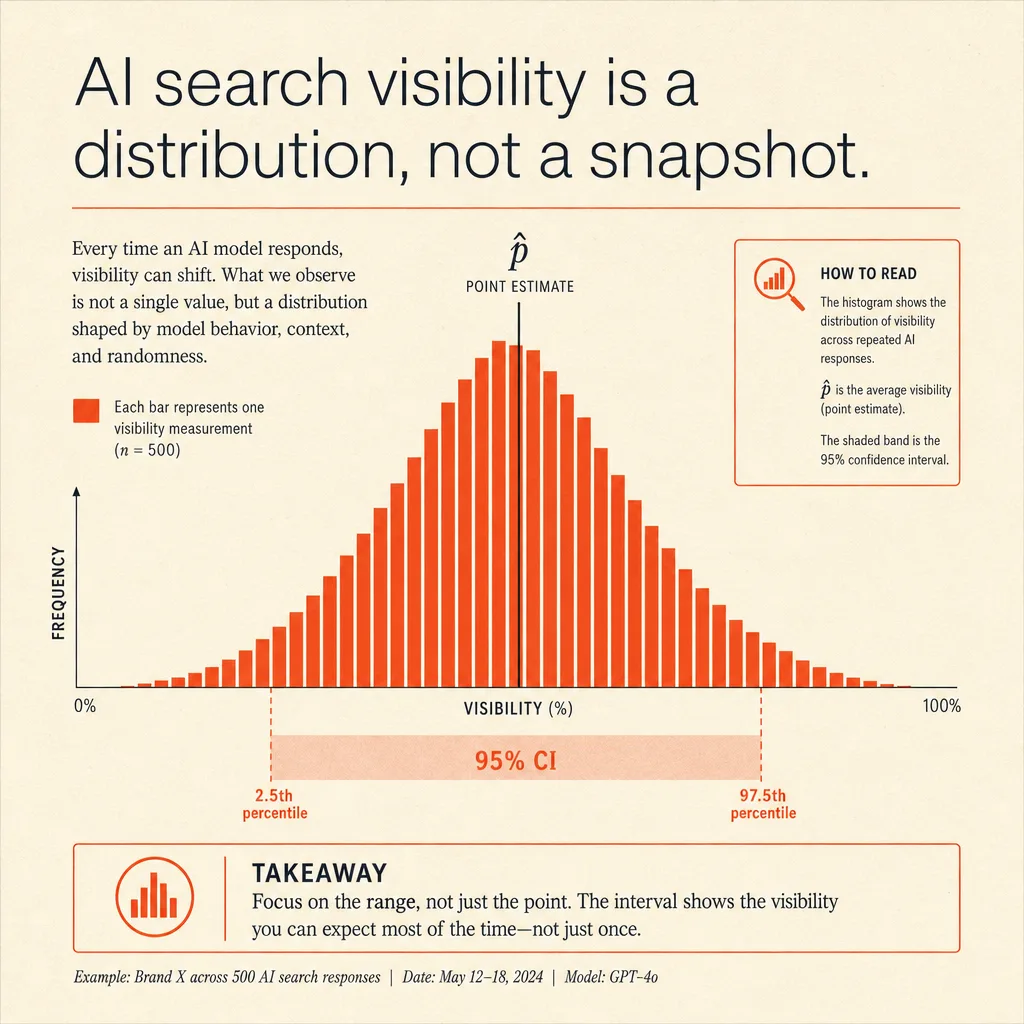
GEO teams should track movement over time, not just one screenshot. Answer engines change. Competitors publish. Sources get updated. A durable program needs trend monitoring, not occasional curiosity checks.
What to Optimize First
Not every GEO action has the same leverage. For most brands, the first wins come from making the brand easier to understand and easier to cite.
Brand entity foundation
Create a consistent brand description across your website, social profiles, directories, partner pages, and press materials. The description should answer who you are, who you serve, what category you belong to, and what problem you solve.
For CitedMe, that foundation is clear: CitedMe is a GEO operating system for global brands. It helps teams understand, prove, and act on their position across AI answer engines.
Source-ready product pages
AI systems need concise pages that explain the product in a way that can be cited. A good source-ready page has a clear H1, factual product description, use cases, supported platforms, methodology, proof points, FAQs, and internal links to related evidence.
Avoid pages that only speak in slogans. Answer engines need facts, not just positioning.
Third-party credibility
Owned content is important, but earned sources often carry more weight. Partner mentions, customer stories, analyst references, reputable publications, and expert quotes can all reinforce the brand entity.
The goal is not to manufacture noise. The goal is to create a body of independent evidence that supports the same clear story.
Prompt-specific content
Once the foundation is clean, build content around high-value prompts. These pages should answer the question directly, explain selection criteria, and include evidence that an AI system can reuse.
Examples include:
- How to measure AI search visibility
- Best metrics for brand citations in answer engines
- How to compare GEO platforms
- How global brands should monitor ChatGPT, Gemini, and Perplexity
- How to fix incorrect brand information in AI answers
Each page should exist because it serves a real decision, not because a keyword list produced it.
GEO Versus SEO, AEO, and Brand Monitoring
GEO overlaps with other disciplines, but it is not identical to any of them.
| Discipline | Primary goal | Main surface | What success looks like |
|---|---|---|---|
| SEO | Rank pages in search results | Search engine results pages | Higher rankings and organic traffic |
| AEO | Provide direct answers to questions | Featured snippets, voice answers, AI summaries | Clear answers selected for specific queries |
| Brand monitoring | Track mentions and sentiment | Web, social, media, communities | Awareness of reputation and volume |
| GEO marketing | Improve brand position in AI answers | ChatGPT, Perplexity, Gemini, Google AI Mode, DeepSeek | Accurate mentions, citations, recommendations, and competitive position |
SEO helps content get discovered. AEO helps answers get extracted. Brand monitoring helps teams see reputation signals. GEO connects those pieces into an operating system for AI search influence.
That distinction matters because AI answer visibility is not just a reporting problem. It requires action: source building, content changes, entity cleanup, competitive analysis, and executive-level measurement.
A Practical 30-Day GEO Marketing Plan
A brand can start without boiling the ocean. The first month should create a baseline and fix the most obvious blockers.
Week 1: Build the prompt map
Choose 30 to 50 prompts across category, comparison, pain-point, and executive intent. Include prompts that mention competitors and prompts that do not. Run them across the AI platforms your buyers use most.
Capture the answer, cited sources, brand mentions, competitor mentions, and factual errors.
Week 2: Identify gaps and wrong answers
Group the findings into patterns. Are competitors cited more often? Are your sources missing? Does the answer describe your category incorrectly? Are old claims still showing up? Are AI engines recommending tools that are not direct competitors?
This step turns scattered screenshots into a prioritized backlog.
Week 3: Fix the highest-leverage sources
Update the pages that answer engines should rely on first: product pages, category pages, comparison pages, docs, About page, author bios, and public profiles. Add missing proof. Remove ambiguous language. Make key claims specific and consistent.
If third-party sources are the blocker, start outreach or partner updates rather than publishing another owned blog post.
Week 4: Re-test and report movement
Run the prompt map again. Compare answer presence, citation rate, accuracy, and competitor overlap. Share a short report with the team: what improved, what stayed weak, and what needs the next sprint.
The goal of the first month is not perfection. It is to create a repeatable loop that can keep improving AI search position.
Common GEO Marketing Mistakes
The first mistake is optimizing only for your own website. AI answers often lean on third-party sources. If external evidence is weak, owned content alone may not move the answer.
The second mistake is measuring only whether the brand appears. A mention can still be harmful if the answer is wrong, outdated, or framed around the wrong category. Accuracy and sentiment matter.
The third mistake is treating every AI platform as the same. ChatGPT, Perplexity, Gemini, DeepSeek, and Google AI Mode can cite different sources and produce different competitive sets. A global brand needs platform-level visibility.
The fourth mistake is chasing volume instead of evidence. More content does not automatically create more citations. Better sources, clearer claims, and stronger proof are usually more important.
The fifth mistake is stopping after an audit. AI search visibility changes over time. GEO marketing only works when teams keep measuring, improving, and verifying.
Frequently Asked Questions
Is GEO marketing the same as location-based marketing?
No. In this context, GEO means Generative Engine Optimization. It is about brand visibility in AI-generated answers, not physical-place targeting.
What is the goal of GEO marketing?
The goal is to improve how often and how accurately a brand appears in AI answer engines. Strong GEO marketing helps a brand earn citations, recommendations, and favorable comparisons when buyers ask AI systems for advice.
Which AI platforms should brands monitor?
Start with the platforms your buyers actually use. For many global brands, that includes ChatGPT, Perplexity, Gemini, Google AI Mode, DeepSeek, and regional AI search products. The important point is to compare platforms, not assume one answer represents the whole market.
How is GEO different from traditional SEO?
SEO focuses on ranking pages in search results. GEO focuses on whether answer engines mention, cite, and recommend a brand inside generated responses. SEO can support GEO, but GEO needs additional measurement and source-building work.
How can CitedMe help with GEO marketing?
CitedMe helps brand teams monitor AI search position across major answer engines, understand which sources shape the answers, compare competitor presence, and turn visibility gaps into action. It is built for global brands that need an operating system for AI search, not a one-off audit.
Author
Mira Chen
Mira Chen studies how global brands appear in AI answer engines and turns that evidence into practical GEO workflows.