Brand Visibility Strategies for AI Search Engines
Learn which strategies improve brand visibility in AI search engines, from topical authority and structured content to source building and measurement.
 Mira Chen11 min read
Brands that once held the top spot on Google now watch their traffic drop as AI search engines pull answers straight from sources without sending clicks. The question isn’t whether you rank—it’s whether AI trusts your content enough to cite it. That’s exactly what what strategies improve brand visibility in ai search engines comes down to. This guide cuts through the noise with three proven shifts: building topical depth, structuring content for extraction, and locking down a consistent digital footprint. Here’s how to become a source AI models naturally reference.
Why Does Brand Visibility in AI Search Engines Matter Now?
The old model worked like this: rank high on Google, get clicks, build traffic. That model is cracking. AI search engines now pull answers from multiple sources and serve them directly. Users get their information without leaving the search page. If your brand isn’t one of the sources AI trusts, you get left out. This is why what strategies improve brand visibility in ai search engines needs to be a priority for any marketing team today. The game moved from “rank top 10” to “be cited by AI.”
The Shift from Search Engines to Answer Engines
Search used to be a list of blue links. You clicked through, read the page, maybe bought something. Now tools like ChatGPT, Perplexity, and Google’s AI overviews skip the list. They generate a single answer by pulling facts from several sources. That answer lives on the search results page. The user never visits your site.
That shift changes how traffic works. For example, if a travel site’s article about “best hotels in Tokyo” used to get clicks from organic search, it now might get summarized by an AI model. The AI cites the site as a source, but the user never clicks. Traffic drops. Even worse, if the AI doesn’t consider that site authoritative, it won’t cite it at all. The site becomes invisible.
Google’s own data shows that AI overviews reduce clicks to individual pages by roughly 20–30% in some verticals. That number will grow. Brands that once held top positions now watch their referrer traffic shrink. The metric that matters is no longer “impression” or “click-through rate.” It’s “AI citation frequency.” If your content isn’t used by AI models to answer queries, you lose a growing slice of search traffic.
This isn’t a future problem. It’s happening now. Businesses that act early can claim a spot in the AI citation graph. Those that wait will find the graph already drawn without them.
How AI Search Engines Decide Which Brands to Mention
AI models don’t browse the web in real time. They rely on training data and knowledge graphs built from crawled web content. When a model needs to answer a question, it pulls from documents it has seen and sources it trusts. Three factors carry the most weight.
| Factor | What It Means |
|---|---|
| Recency | Newer content is more likely to be used, especially for time-sensitive queries |
| Authority | Sources cited by high-trust domains (government, academic, major news) rank higher |
| Consistency | Same information found across multiple reputable sources increases trust |
Authority is not just about backlinks. AI models look at whether an article is referenced by Wikipedia, government sites, or industry publications. One mention from a .gov site can outweigh dozens of general blog posts. This is why brands that already have a presence in those spaces hold an edge.
Structured data also plays a role. FAQ schema, HowTo schema, and Organization schema help AI extract clean information. Without it, your content is just text. With it, your content becomes a machine-readable source that AI can cite more easily. Many brands overlook this simple step.
Another hidden factor is mention consistency. If your brand appears with the same name, logo, and description across many high-quality sites, AI models see that as a signal of legitimacy. Inconsistent naming—or worse, conflicting information—hurts your chance of being cited.
The takeaway is straightforward: AI search engines reward brands that are authoritative, consistent, and machine-friendly. If you don’t meet those criteria, your content won’t appear in AI-generated answers.
What Are the Most Effective Strategies to Improve Brand Visibility in AI Search?
If you’re trying to figure out what strategies improve brand visibility in ai search engines, the answer starts with how AI models decide what to cite. They don’t rank pages by keywords alone. They look for depth, structure, and consistency across the web. These four moves line up with how AI actually works.
Build Topical Authority with Content Clusters
Pick one core topic your audience cares about. Write a pillar page that covers it from every angle. Then create supporting articles for each subtopic — one per question, one per use case, one per common mistake. Go deep. Include original data, real examples, and expert quotes. AI models scan for breadth and depth in the same domain. Link each supporting article back to the pillar page with clear anchor text. That web of internal links tells AI you own that topic. A single article won’t cut it. You need a cluster that shows mastery.
Structure Content for AI Readability and Extraction
AI search engines pull answers from well-organized pages. Use H2 and H3 headings that match real search queries. If someone asks “how to reset a password,” your H3 should say exactly that. Include bullet lists for steps, tables for comparisons, and direct definitions for key terms. Add structured data markup — FAQPage, HowTo, Article, Organization — so AI can parse your page without guessing. Write in a factual, direct tone. Marketing fluff gets ignored. Clear, scannable content gets extracted and cited.
Expand Your Digital Footprint Beyond Your Website
Your own site is only one signal. AI cross-references your brand name across the web. Get mentioned in industry publications, news outlets, and Wikipedia. Claim and fill out profiles on review platforms, directories, and social media. Contribute guest posts with expert quotes. Consistent brand mentions across trusted sources build AI trust faster than any single page. If your name, logo, and description match everywhere, AI treats you as a verified source.
improve for Conversational and Long-Tail Questions
AI search favors natural language. Map user intent: some people want facts (informational), some want to buy (transactional), some want a specific page (navigational). Write content that answers “how,” “what,” “why,” and “which” with full sentences. Break long-tail questions into dedicated H3 sections. Include an FAQ block where each question is a clear H3 followed by a direct answer. That structure tells AI exactly what you cover. The more precisely you match how people speak, the more likely AI pulls your answer.
These four strategies — topical clusters, clean structure, off-site presence, and conversational format — directly answer what strategies improve brand visibility in ai search engines. Start with one, then layer the rest. AI citation isn’t a lottery. It’s a set of signals you can control.
How Do You Measure Your Brand’s Visibility in AI Search Engines?
You can’t fix what you don’t track. Measuring visibility in AI search engines works differently than checking Google rankings. AI models pull answers from multiple sources, and a single mention in a ChatGPT response can drive attention without a click.
The key is to combine manual checks with analytics. Start simple, then layer in tools as you go.
Simple Manual Testing: Ask Your Brand’s Key Questions
Pick 10–15 questions your customers actually search. For example, if you sell productivity software, ask “best tool for task management” or “how to automate workflows.”
Plug each question into four AI platforms: ChatGPT, Perplexity, Google AI Overviews, and Bing Copilot. Record three things:
- Is your brand mentioned?
- How prominent is the mention? (first result, in a bullet list, or buried in text)
- What context surrounds it? (positive, neutral, or negative)
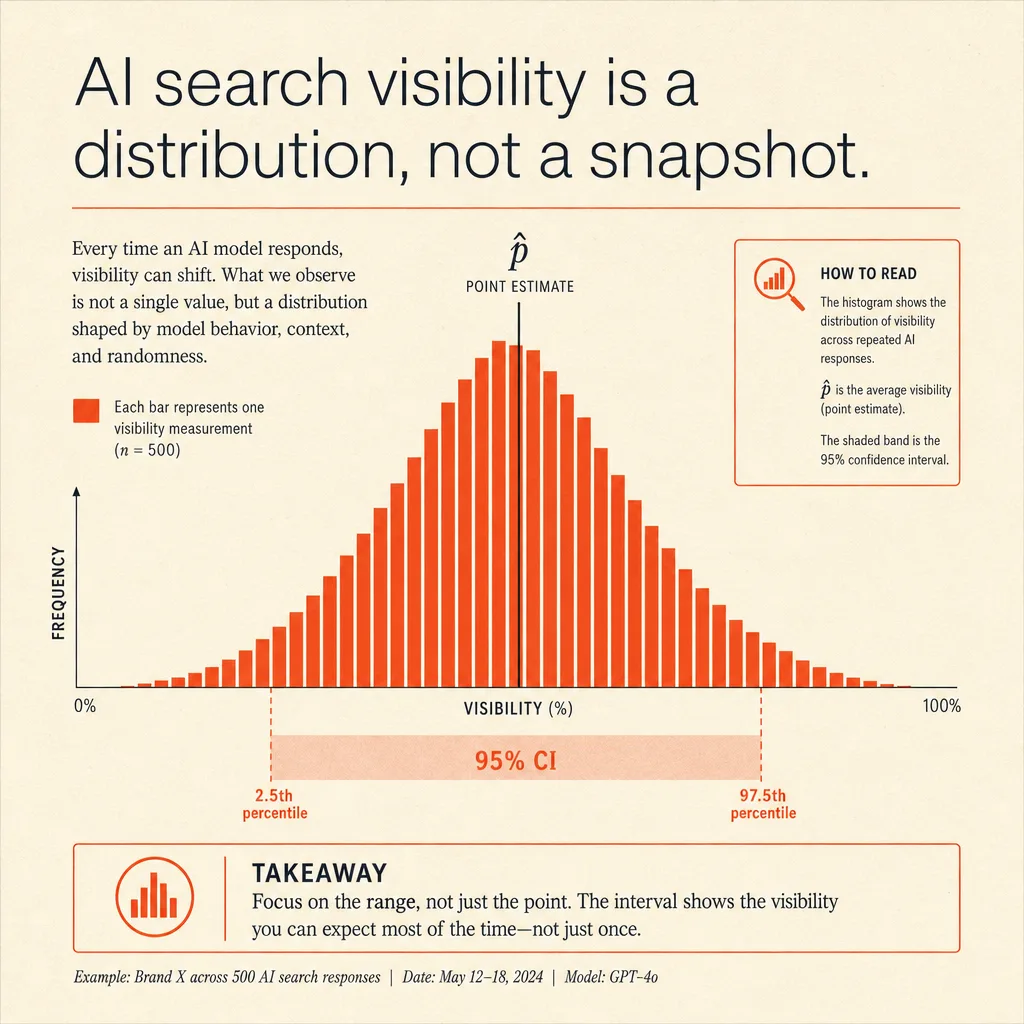
Do this once a month. Track changes. A brand that appears in 3 out of 10 responses this month but 6 out of 10 next month is gaining ground.
The rule is simple: if AI doesn’t cite you, you’re invisible. That’s the single most important insight to take from this audit.
Using Third-Party Tools and Analytics
Manual testing gives you a snapshot. Tools give you scale. Platforms like Semrush and BrightEdge now include AI visibility modules that scan AI search results automatically. You can set up alerts when your brand appears or disappears.
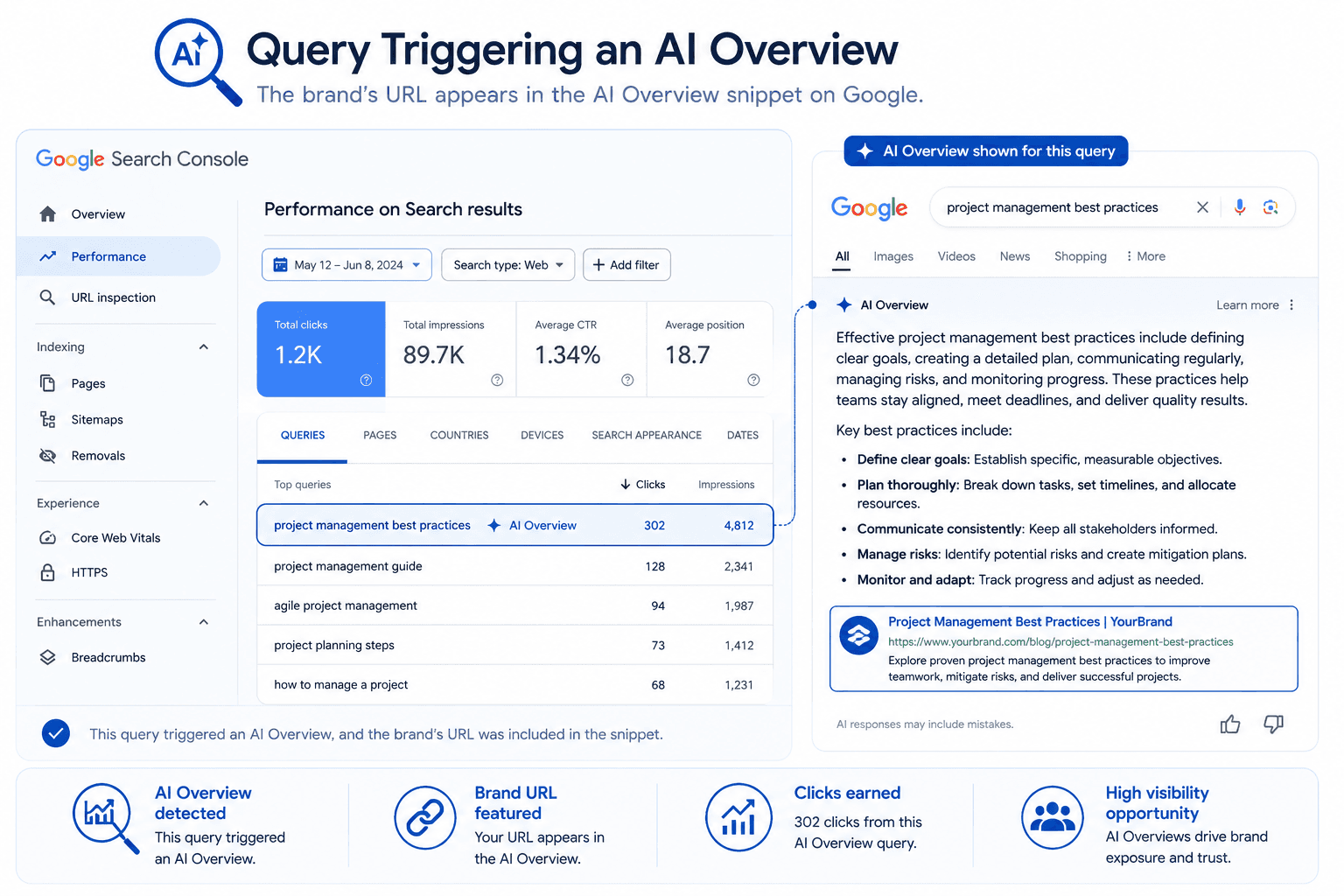
Dig into your own data too. Check Google Search Console for queries that trigger featured snippets or AI Overviews. Those same queries often feed into ChatGPT’s knowledge base. Also look at referral traffic from IPs that belong known AI platforms. This traffic won’t show up as “ChatGPT” in your analytics, but you can spot patterns.
Another proxy is brand search volume. When more people search for your brand by name, it often means AI answers drove curiosity. A steady climb in brand searches over three months hints at growing AI influence.
One note: don’t rely on any single metric. Manual tests catch nuance tools miss, and tools catch scale manual tests can’t reach. Use both. And repeat monthly. AI search results change fast—what worked last month may disappear tomorrow.
That’s the framework: ask real questions, check across platforms, use tools to scale, and watch brand search trend. Measure consistently, and you’ll know exactly what strategies improve brand visibility in ai search engines actually work for your business.
What Is the Future of Brand Visibility in AI Search?
The Rise of Real-Time Citation and Retrieval-Augmented Generation
AI search engines don’t just crawl your site once and forget it. They pull fresh data at the moment someone asks a question. If your brand’s information is six months old, the AI may cite a competitor’s newer version instead.
This changes how you approach what strategies improve brand visibility in ai search engines. Keeping public content accurate and up-to-date is now a daily task, not a quarterly review. When a product recall hits or a policy changes, the brand that updates its site within hours gets the AI mention. Newsjacking works the same way: a well-timed announcement about an industry event can land a citation that lasts for weeks.
Real-time data feeds are the next step. Brands that expose structured data through APIs — like current inventory or live pricing — give AI models a direct pipeline. Retrieval-augmented generation (RAG) systems prefer these feeds because they reduce hallucination risk. The more your content behaves like a live source, the more likely AI will pull from it.
Frequently Asked Questions
What strategies improve brand visibility in ai search engines, and how quickly do they work?
Typical results appear in 3–6 months. Speed depends on your current authority and backlinks. Strong structured data and existing citations help you gain visibility faster.
Do traditional SEO methods still help when considering what strategies improve brand visibility in ai search engines?
Yes. Traditional SEO like quality backlinks and clear content directly supports AI citation. Supplement it with answer-focused content that directly responds to common user questions.
Which AI search engine should my brand prioritize first?
Start with Google AI Overviews for scale, then ChatGPT for high query volume. Expand to Perplexity, Bing Copilot, and future engines as they grow.
Can small local businesses compete for visibility in AI search?
Yes. improve local business schema, earn reviews, and keep your name, address, and phone number consistent across directories. Local AI queries often pull from Google Business Profile.
How do I know if my brand is currently visible in AI search?
Run incognito searches for common questions in your niche. Check if your brand appears in the generated answer or cited sources. Also monitor referral traffic from AI platforms.
Focusing on conversational queries, structured data, and authoritative content ensures your brand aligns with how AI search engines interpret and prioritize information. These strategies turn passive visibility into active engagement by making your brand the most relevant answer. Ready to see how your brand appears in AI search? Request an AI Search Position Assessment.
Author
Mira Chen
Mira Chen studies how global brands appear in AI answer engines and turns that evidence into practical GEO workflows.